Hire a freelance product designer for your SaaS or AI product
I design SaaS and AI products end to end: user journeys, flows, interfaces and the design system behind them. You hire one senior product designer who joins your team quickly, works in your tools and makes decisions your engineers can build without guessing.
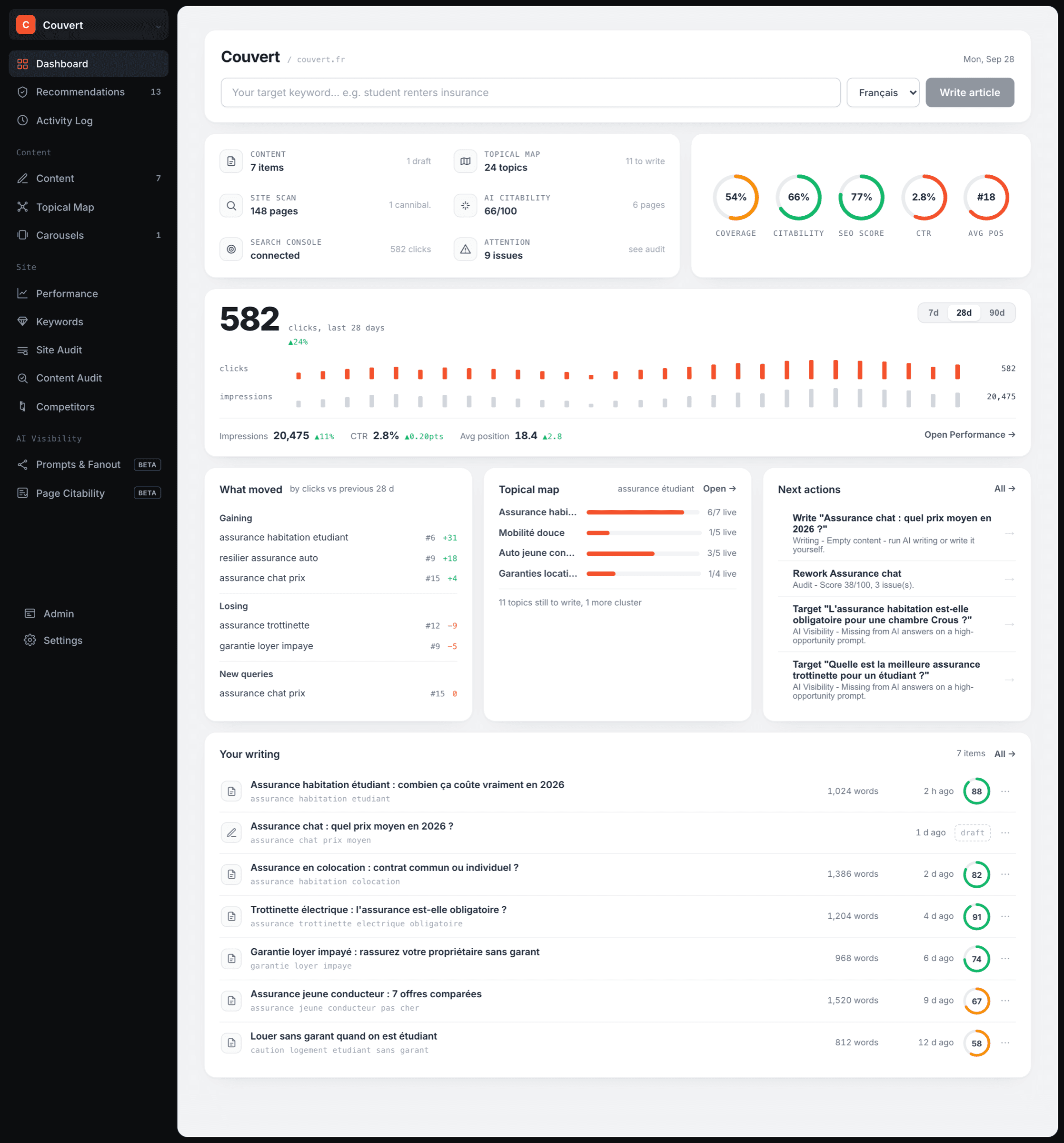
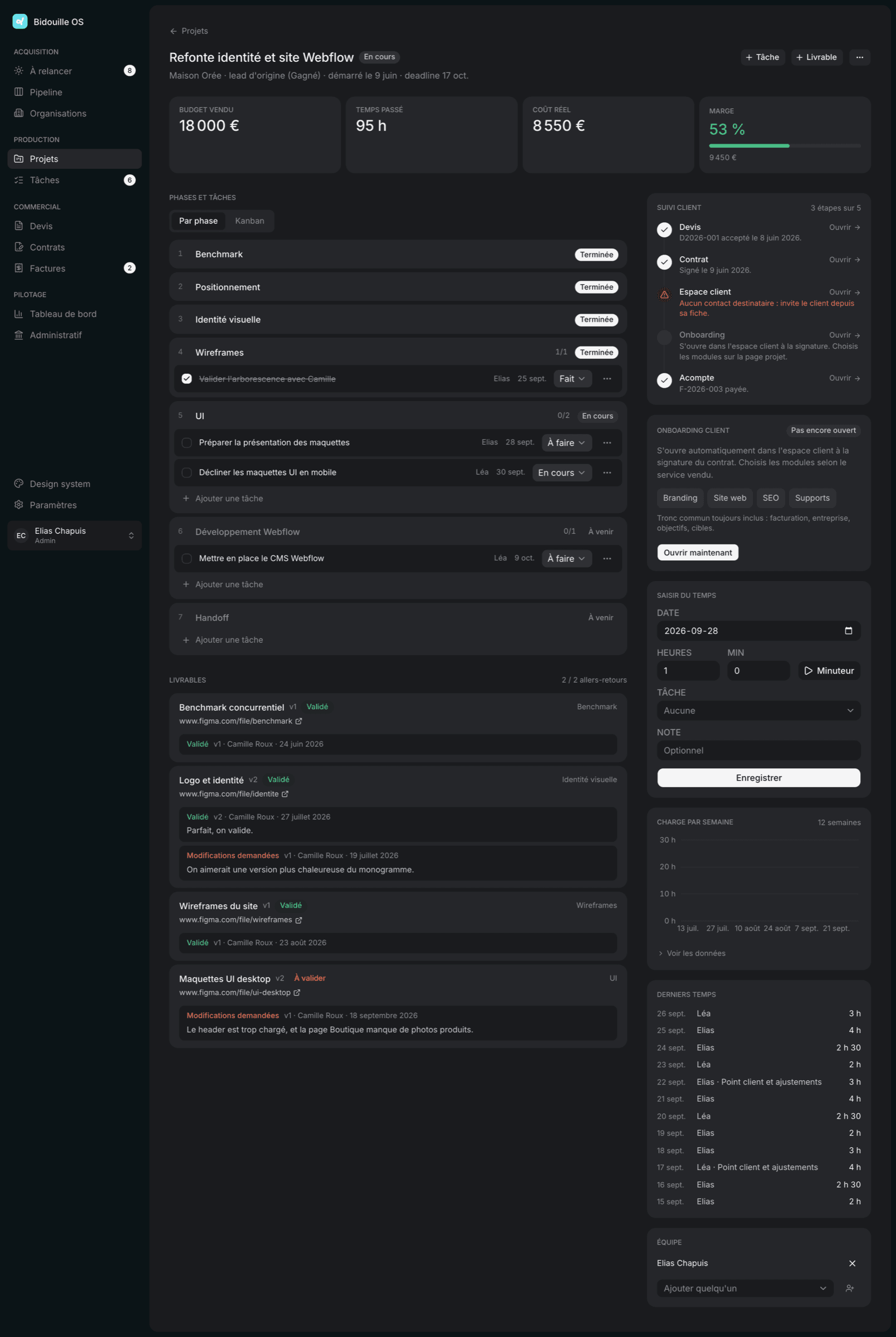
Besides client work, I designed two products of my own and took them to production: Plume SEO, an SEO and GEO studio, and Bidouille OS, the tool that runs a design studio from first call to final invoice. Being the user, the designer and the owner at once changed how I make product decisions.
/WHAT_I_DO
What a senior product designer does for a startup
A senior product designer does not start with screens. I start with the journey: who uses the product, what they are trying to get done and where they get stuck. Then come flows, wireframes and interfaces, tested in prototypes before your engineers commit time to them.
The other half of the job is less visible: making trade-offs with the product manager and the engineers, keeping the design system consistent, and saying no to features that would make the product harder to use.
- User journeys, flows and information architecture
- Wireframes and high-fidelity UI in Figma
- Clickable prototypes to test before building
- Design systems: tokens, components, documentation
- UX audits of existing products, with prioritized fixes
- Design review of what ships, in staging
/WHEN_TO_HIRE
When to hire a freelance product designer
Four situations come up again and again: building an MVP before a raise, redesigning a product that grew feature by feature after product-market fit, setting up a design system before the team grows, and adding AI features users need to trust. In each case you need senior design quickly, for a defined period, more than you need another permanent seat. For what that work looks like day to day, see SaaS UX design and SaaS onboarding.
| Freelance product designer | Full-time hire | Product design agency | |
|---|---|---|---|
| Time to start | Usually a few weeks | Often several months of hiring | A few weeks, after a proposal |
| Seniority | Senior, chosen for the problem | Depends on budget and market | Mixed team |
| Cost model | Sprint or monthly retainer | Salary, benefits and equity | Project fee, often the highest |
| Commitment | Flexible, stops when the need ends | Long term | Per project |
| Best for | MVPs, redesigns, design systems, AI features | Continuous product work at scale | Large scopes with many parallel tracks |
/SERVICES
Product design services
The scope adapts to your stage. These are the building blocks.
Product discovery and UX research
Interviews, reviews of analytics and support tickets, and quick usability tests, at the scale the decision needs. The goal is a clear direction, not a research report nobody reads.
Flows, wireframes and prototypes
Complete flows, including empty states, errors and edge cases, before any polished UI. Prototypes let your team and your users click through a feature before anyone writes code.
UI design and design systems
Interfaces built on tokens and components, with Figma variables that map to your codebase. A good token, a clean component or a solid type scale saves a team more time than any single screen.
Designing AI features people trust
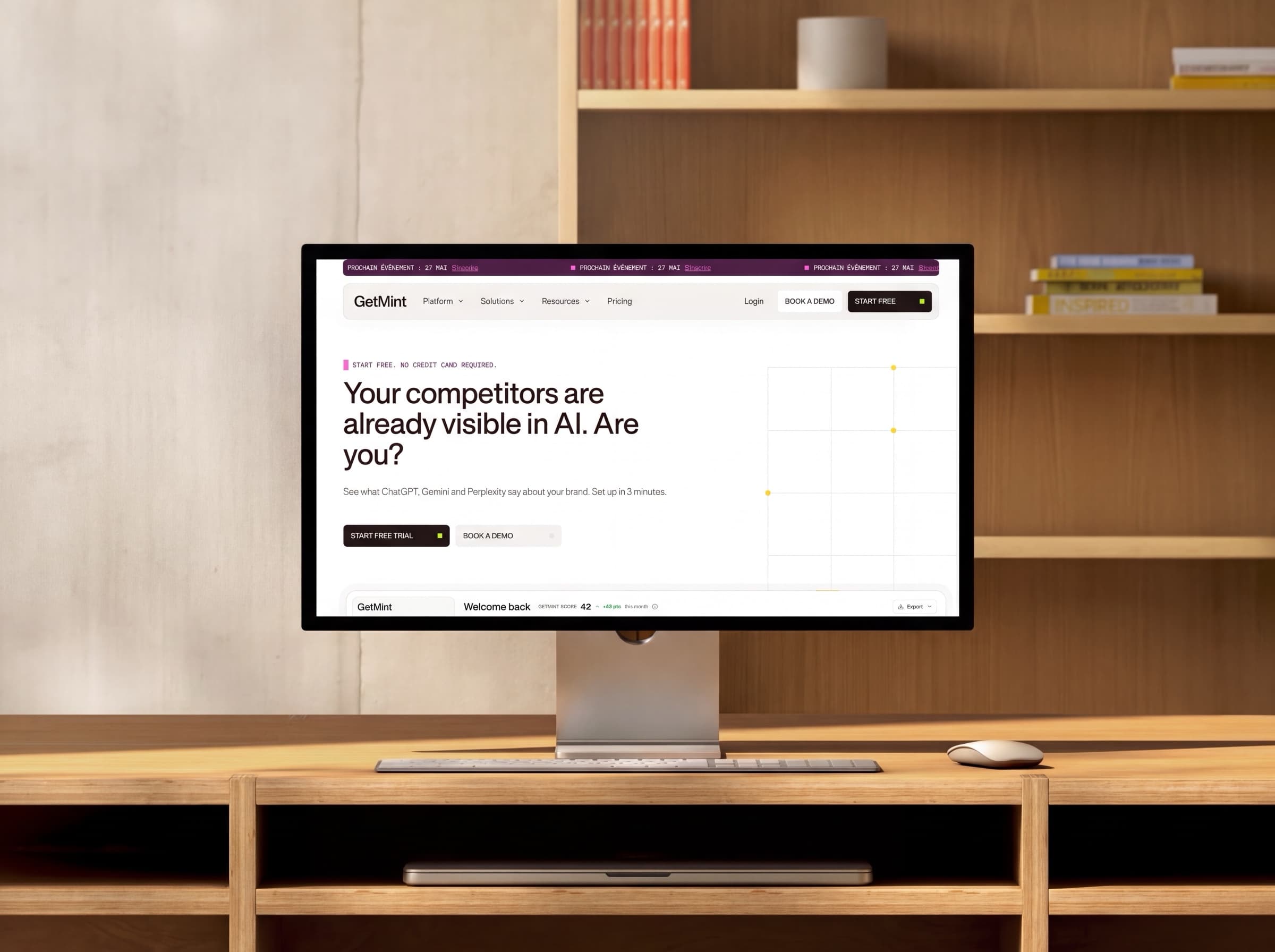
AI features fail when users cannot tell what the model did or why. I design for that: clear inputs, visible sources, editable outputs, honest loading and error states, and a way back when the answer is wrong. My clients include AI products such as Bravi and GetMint, and my own tools rely on AI at their core.
Working with your engineers
Specs, tokens and components your developers can implement without guessing, a review of each feature in staging, and quick answers when a real constraint forces a change. Design does not stop at handoff.
/CASE_STUDIES
Product design case studies
Product work is often under NDA, so some of these projects are my own. They show the parts a portfolio of final screens hides: flows, systems and trade-offs.
GetMint: a design system for product and marketing
For GetMint, I built the Figma foundation: a color scale from 50 to 950, semantic tokens for light and dark themes, sizing and typography for desktop and mobile, and a documented style guide. The team now has a system it can scale into the product and marketing without rebuilding components each time.
Plume SEO and Bidouille OS: my own products
Plume SEO takes a site from keyword research to a published article and tracks whether AI assistants cite it, around one loop: plan, write, measure. Bidouille OS covers quotes, e-signed contracts, a client portal and invoicing, designed around a mapped client journey before any screen. Both run on token-based design systems.
Glanceable and Bravi: making AI products readable
For Glanceable, AI analysis of Voice of the Customer data, I designed product visual templates so enterprise buyers understand the platform at a glance. For Bravi, I mixed real UI with field photography to show a sales rep asking a question and getting a complete answer.
/HOW_WE_WORK
How we work together
I join your tools rather than asking you to adopt mine: your Figma, your Slack or Teams, your issue tracker. A typical week has one or two working sessions with the product lead, async updates in between, and a design review with engineering before anything moves to build.
I am based in Saskatoon, on Central Standard Time all year, so my day overlaps with teams across Canada and the US. Work with European teams runs on morning overlap and async updates.
/RED_FLAGS
Red flags when hiring a product designer
Whoever you hire, these signs usually predict a difficult project:
- A portfolio of final screens only, with no flows, systems or explanation of decisions
- No questions about your users, your data or your constraints before proposing a solution
- Dribbble-style concepts for a complex B2B product, with no empty or error states
- No plan for working with engineers, or a habit of “throwing designs over the wall”
- Vague scope and pricing, or a promise to redesign everything in two weeks
- No opinion on what not to build
/AI_AND_DESIGN
Is AI replacing product designers?
No, but it is changing the job. AI can generate screens, components and even working prototypes in minutes. What it cannot do is decide which problem is worth solving, which flow your users will actually understand, or what to cut so the product stays simple.
Taking my own products to production with AI as a partner made this concrete: production got fast, and the real work became product decisions, reviews and tests. That is where a senior product designer is worth paying for now. Teams that skip that step ship faster and end up with products that feel generic.
/PRICING
How much does it cost to hire a product designer?
Two ways to work together, in Canadian dollars. Both start with a short intro call and a written scope.
Product design sprint
From CAD 8,000
A defined project: an MVP, a redesign of a key flow, a new AI feature or a UX audit.
- Discovery and flows
- UI design and prototype
- Components added to your system
- Handoff and review in staging
Monthly retainer
From CAD 6,000 / month
Your part-time senior product designer, embedded in the team.
- Regular working sessions
- Design system ownership
- Design review with engineering
- Flexible from month to month
A design system setup or cleanup can be scoped as a sprint of its own.
/PROCESS
How a project runs
- 01
Understand
Users, goals, constraints and what the data and support tickets say.
- 02
Map
Journeys, flows and structure before any visual design.
- 03
Design and test
Interfaces and prototypes, tested with users or customers when possible.
- 04
Ship
Specs, tokens and components for your engineers, then a design review of the build in staging.
/FAQ
Frequently asked questions
Should I hire a freelance product designer or a full-time employee?
Hire a freelancer when the need has a clear shape and a deadline: an MVP, a redesign, a design system, an AI feature. Hire full time when design work is continuous and someone has to own the product for years. Many startups do both in order: a senior freelancer sets the foundations, then the first hire takes over from a clean system.
Can you join our team part-time?
Yes, that is what the monthly retainer is for. I work as your part-time senior product designer, with regular sessions and async updates, and the scope adapts from month to month.
Do you work in our Figma and with our engineers?
Yes. I work in your Figma files, your design system and your issue tracker, and I review features in staging with your engineers. Tokens and components are set up to map to your codebase.
Can you build a design system from our existing UI?
Yes. I audit the existing screens, extract the real patterns, define tokens and components, and document them. It is usually done in stages, so the product keeps shipping while the system grows.
Do you do user research?
Yes, at the scale the decision needs: interviews, analytics and support reviews, and usability tests on prototypes. The output is a decision and a design, not a long report.
How fast can you start?
It depends on my current projects; I give you a start date on the intro call. Sprints usually start sooner than retainers, because the scope is set upfront.
Do you work with US companies?
Yes, I work remotely with teams in the US, Canada and Europe, on Central Standard Time all year. Confidentiality terms are part of the agreement before we share anything sensitive.
Can AI help me design a product?
It can speed up research synthesis, copy, variations and prototypes, and I use it every day. It cannot tell you which problem matters to your users or what to leave out, which is where most products succeed or fail.
/MORE
Other services
Have a project in mind?
Tell me where you are and what you need. I reply within a day, usually with a few questions and a time to talk.