Joinery UI
- Year
- 2026
- Services
- Stack
- Website
- joineryui.com
/CONTEXT
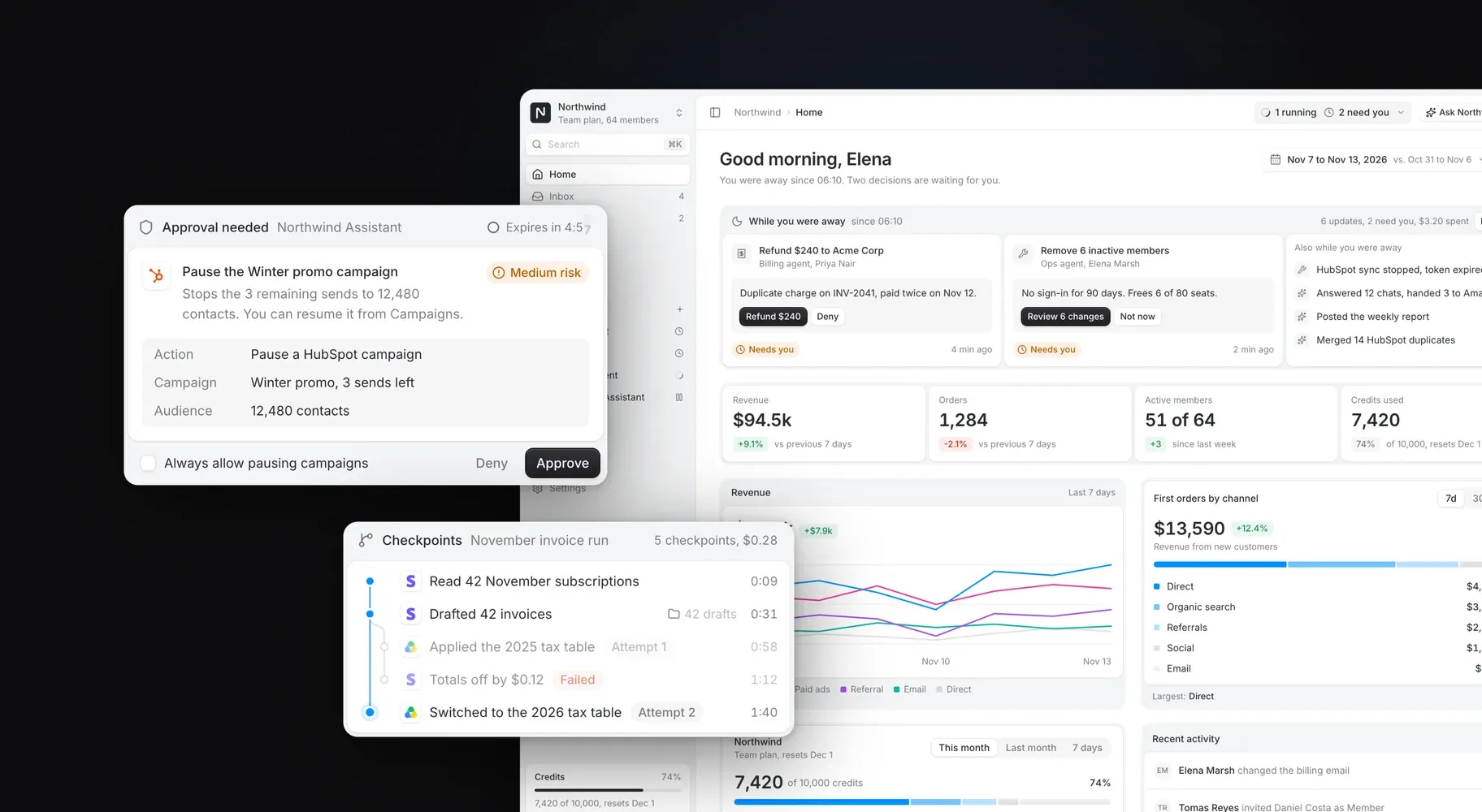
Joinery UI is my own product: a kit of in-app screens and components for SaaS products and the AI agents that now work inside them. Every piece exists twice, in Figma and as a React file built on shadcn/ui, with the same tokens, so a designer and a coding agent start from the same system.
/PROBLEM
Most UI kits stop at the landing page. The screens a SaaS team builds every week, billing, members, settings, an inbox, are left to whoever opens the editor. And agents brought questions no kit answered yet: how do you show what an agent is doing, ask before it acts, or let someone take a run back? Coding agents also need rules, not only components, or every new screen drifts.
/WHAT_I_DID
I started with the foundations: colour and type tokens, light and dark modes, four themes, then the base components in a quiet style, with hairline edges, compact sizes and soft states.
On top of them I designed a family for AI products: a chat that shows its reasoning, tool calls and sources, an inline diff accepted change by change, checkpoints to rewind a run, an autonomy dial, approval and decision cards, a model picker. Each one answers a question people ask about an agent: what is it doing, what can it touch, and how do I undo it.
Then 39 full screens put them to work in one fictional workspace, Northwind, with its agents, invoices and customers, so every component is shown with realistic data. The whole kit is agent-ready: a shadcn registry, docs a language model can read, and rules a coding agent follows.
/WORK
/RESULTS
Joinery UI is live at joineryui.com with 86 components and 39 screens, a free tier and a Pro tier with live demos. Joinery Refs, my reference library, is built entirely with it.
/WHAT_I_LEARNED
Designing for agents is mostly designing trust: motion matters less than showing, at every step, what the agent did and how to take it back. And realistic data did more for the kit than any polish, since a component only looks right once it holds a real invoice.